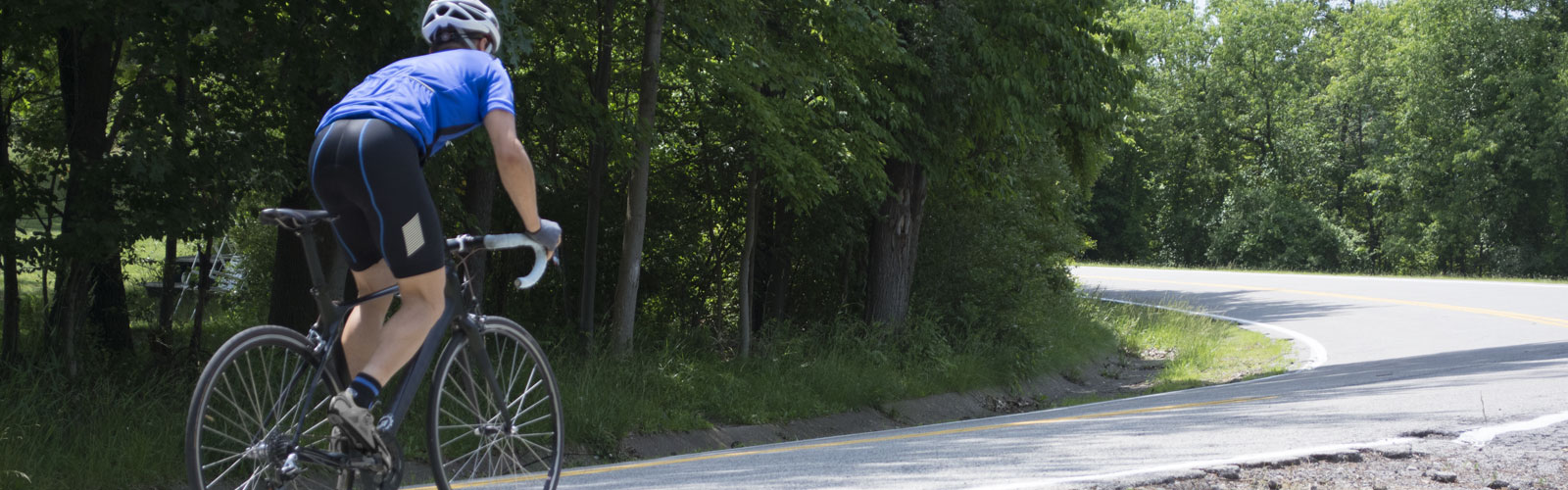
If you want to be more comfortable on your bike, you are at the right place. We have been making cycling apparel for over 30 years. We have designed a short for every cyclist. Our goal is to make you more comfortable. We have a wide selection of road bike shorts and bib-shorts, along with mountain bike shorts, padded liners, and padded underwear. We make most of our apparel in the USA. Our men's cycling shorts will make a difference in the quality of your bicycle rides. We use high-quality, stretchy spandex fabrics and high-end luxury chamois padding from Italy. Give us a try; you'll be happy you did!
The most important part of a men's bike short is the chamois pad. A good chamois pad design is around the Ischium bones, aka your "sit bones." The Ischium bones support your body's weight while seated on a bicycle and depend on the density of the chamois pad for proper cushioning. We offer many chamois pads to choose from, ranging from thin to thick. Our Aero Tech Designs bike shorts come in a wide range of chamois pads to help you ride longer and feel stronger. They all have in common the ability to cushion the saddle area. We designed our men's bike shorts and cycling bibs to be durable and comfortable for the long haul. Gel-filled Bicycle Shorts are ideal for beginners and long-distance cyclists who need pressure relief from the sit bone area. Thin Padded Bike Shorts are great for experienced cyclists who are comfortable on their saddles or triathletes who want one garment to swim, bike, and run. The thin pads are also ideal for anti-chafe needs. The dense chamois pads we use in most of our road bike shorts are in the elite category and are the best for high mileage and century rides over 50 miles. We also carry padded bib shorts, bike shorts without a waist elastic, and held up with straps or suspenders. Experienced cyclists often prefer the use of cycling bibs.
The fabric in road bike shorts is a stretchy spandex/polyester fabric. There are several reasons for using spandex in the design of these shorts. Spandex breaths well, drys fast and offers plenty of compression for the muscles. The fabrics used for our road bike shorts are usually a six-way, tricot, knit nylon, or polyester. The lightweight materials are about 5.5 to 6 ounces per square yard. A medium-weight material is about 6.5 ounces, and a heavyweight fabric would be about 8 ounces per square yard. Nylon/Lycra blends are more rugged and abrasion-resistant, which is long-lasting. Polyester/Lycra blends are cooling and wicking. We use this fabric primarily because of the freedom of movement and comfort during cycling. The higher the spandex content - the more compression on the muscles. High Spandex content (over 20%) is a sign of compression support for high-end bike shorts. The higher the spandex, the more stretchy and supportive the fabric is. This compression massages the muscles to help work out lactic acid and enhances blood flow to the muscles, which helps reduce fatigue by keeping fresh blood circulating to the working muscles.
You will see the leg gripper or leg band feature in most bike shorts. These grippers are essential to prevent the shorts from riding up the legs. During the cycling motion, your muscles are constantly flexing and moving. There is nothing worse than tugging at your clothes to keep them in place during your ride. When a pair of bike shorts ride up on the leg, it creates an opportunity for bunching in the chamois pad. This bunching of the chamois pad can lead to chafing, rubbing, and, worst of all, saddle sores. The use of leg elastics prevents the movement of the garment, so the shorts stay stretched, and the chamois remain in place.
We design our bicycle shorts to include a reflective element on the moving areas of the leg. The leg makes the ideal location for reflective materials because it is visible for a motorist in low light conditions. 3M makes most of the reflective elements we use.
Wear road bike shorts without underwear, so the pad is held tight to the skin in the saddle area. You will get the most advantage of its wicking ability. Bike shorts work best when worn tight so that the lycra spandex supports the working muscles. When you try on a pair of bike shorts, they should not be too tight or binding. It should fit snugly, so the chamois pad stays in place.
Panels - bike shorts are often described as 6-panel or 8-panel shorts.
Inseam - the length of the leg's inseam is a matter of personal preference. We think bike shorts should be a few inches above the knee. Biking shorts come in Tall (about 11 inches), Short (about 5 to 7), and Regular Inseams (about 8-9 inches).
Elastics - waist elastic is essential to keep the shorts in place. Wider elastic has less tendency to roll. Some cycling shorts have a drawstring, especially for multiple uses like triathlon and fitness. A drawstring is not essential for road shorts but may come in handy.
Cycling shorts should fit snug with the pad close to the skin, or they will lose the potential benefits of wearing them. A correctly sized pair of road shorts is essential to ensure that you get the most out of them. When looking at the manufacturer size chart, you will fit into the size bigger or smaller with varying degrees of compression. We suggest the use of the manufacturer's size chart. If you want the garment to fit loosely, you can go up a size. However, cycling Shorts should fit snug.
After each use, wash your padded bike shorts. The best way to care for road shorts is to machine wash and air dry. We recommend machine washing to remove all bacteria from the chamois pad. The goal of clean shorts is to prevent bacteria buildup on the chamois pad, leading to saddle sores. Saddle sores are a cyclist's worst enemy. Air drying the spandex shorts helps the spandex fibers last longer without drying out. When on a multi-day bike tour, we recommend washing your shorts in the hotel sink when possible. They will completely air-dry overnight. Men's Padded Bike Shorts are worn "without underwear." We highly recommend using and frequent application of an anti-chafe cream for long-distance rides. Put the cream on your skin, between your legs, and all over the chamois pad. Squeeze a generous portion of the cream on the chamois pad and rub it all over. The lubricant on the chamois pad and your skin will prevent hot spots from abrasion. This cream application may be essential to enhance riding comfort on long bicycle tours or long daily distances.
